
How to Conduct an Author Interview for a Podcast: A Beginner's Guide
Somewhere in the middle of a good author interview, the promotion stops and the conversation starts. The talking points fall away, the writer forgets they are meant to be selling something, and they tell you how the book nearly fell apart, or which scene they rewrote eleven times, or why they abandoned the first draft altogether. That moment is what listeners come for, and it is almost never an accident. It comes from preparation, a decent microphone, and knowing when to say nothing at all.
If you are planning your first author interview for a UK book podcast, here is a practical route from choosing a guest to publishing the episode.
Start with a guest you are genuinely curious about
The temptation is to chase whoever has the biggest following. In practice, a debut novelist with an unusual day job and a willingness to talk usually makes better listening than a bestseller working through a press release. Read the book properly before you approach anyone, and make notes as you go — the chapter you wished were longer, the ending you are still arguing with, the line you copied out. Those notes become your questions later.
Approach the author's agent or publicist if they have one, or the author directly if they do not. A short email works best: who you are, what the podcast is, how long you would need, and two or three sample questions so they can see the shape of the conversation. If your podcast is small, say so rather than implying otherwise. Authors are used to small podcasts and often say yes.
Write questions that open doors rather than trapdoors
Weak interview questions ask for information the listener could find on the back cover. "Where did you get the idea?" rarely produces anything usable; "You've said the novel began as a short story about a bus driver — what survived from that version?" almost always does. The difference is specificity.
Four shapes of question do most of the work:
- The process question. How the work was actually made — drafting habits, rewriting, research, the order things were written in.
- The friction question. Where the book resisted. What was cut, what was argued over with an editor, what still niggles.
- The close-reading question. Quote a line back to them and ask what it is doing there. Authors are often startled and pleased that someone noticed.
- The reader question. What they hope a reader takes away, or what they would say to someone who misread it entirely.
Write more questions than you need — twenty for a forty-minute interview — then mark the six you would keep if everything else fell away. Put them in a loose order, and be ready to throw the list out when the conversation goes somewhere better.
Sort your recording setup before the day
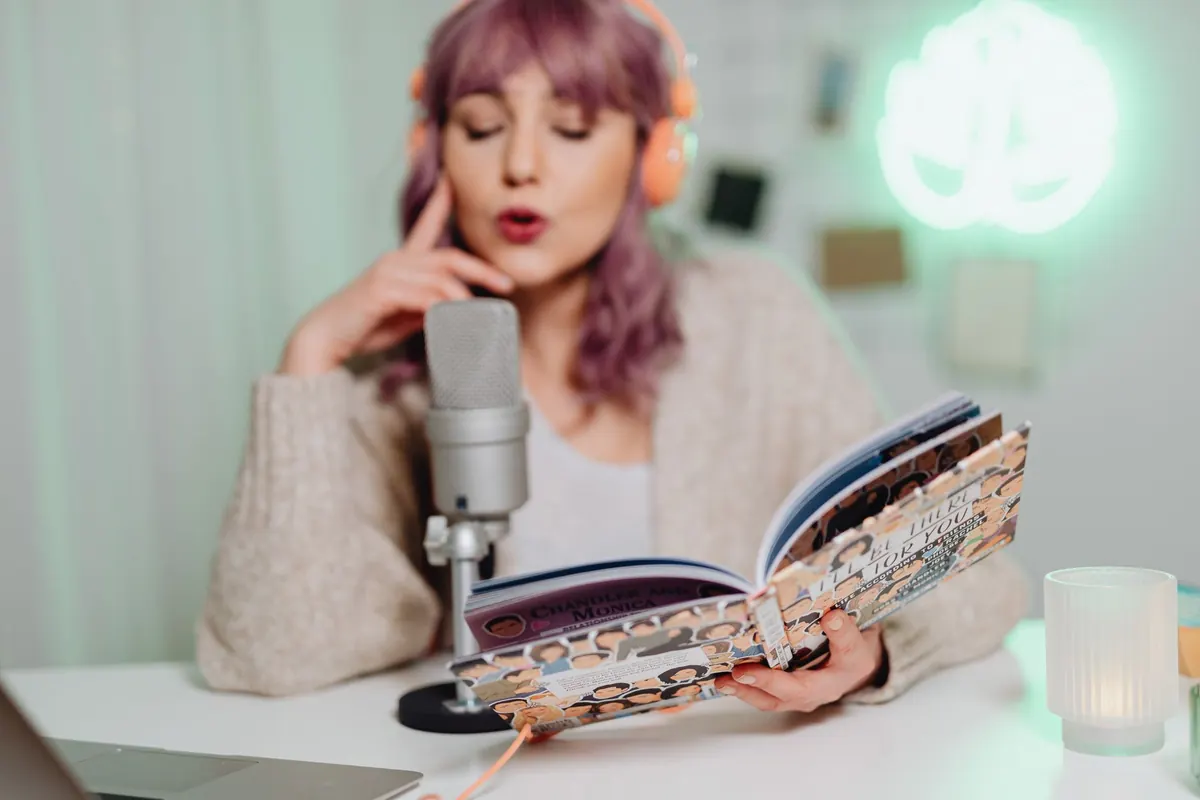
You need less kit than the internet suggests: one USB microphone, a pair of wired headphones, and a room with soft furnishings. A modest dynamic microphone on a stand in a carpeted room with curtains will beat an expensive condenser in a bare kitchen with hard floors. Record in WAV at 44.1 kHz where you can, and always monitor through headphones — laptop speakers cause echo and feedback.
If you are recording remotely, agree the platform in advance, ask your guest to wear headphones, and record your own side locally as a backup in case the call drops. Test for a minute and listen back before you start the real thing. A quick email the day before, confirming the time and the joining link, prevents most disasters.
Run the conversation like a listener, not a journalist
Open with something human and easy, then move into the book. Once your guest is talking freely, your job shifts from asking to listening. Silence is your most useful tool: wait two seconds after they finish an answer. Often the real answer arrives in that gap, and if you fill it with "yes, absolutely", you have lost it.
Keep your own interjections to a minimum, because every "mm-hm" is something an editor has to work around later. If they skate past something interesting, stop them gently:
"Hold on — you just said you threw away the first hundred pages. Can we go back to that?"
People rarely mind being interrupted for their own good line. Keep half an eye on the clock but do not announce it, and have a closing question ready that lets them talk about what comes next — followed by a clean, friendly ending.
Edit for pace, not for perfection
Cut the admin: the greetings, the "can you hear me now", the false starts. Keep the hesitations that carry meaning — a pause before a difficult answer is not a mistake. From an hour of raw audio, removing ten to fifteen minutes usually makes the episode sharper without flattening it.
Work in a sensible order. Clean the sound first, using noise reduction sparingly and a gentle high-pass filter to remove low rumble, then balance the two voices so neither guest nor host sounds noticeably louder, then edit for content. Add light compression, and keep your overall loudness consistent from episode to episode; many podcasters aim for roughly -16 LUFS for stereo. Finally, use music you have the rights to, and keep any intro sting short enough that regular listeners do not start skipping it.
Publish well, then follow up
Show notes do more for an episode than most hosts expect. Include a short summary, timestamps for two or three standout moments, the book's title and publisher, and where listeners can find it — a local bookshop, the publisher's site or the usual retailers. Add a line about the author's other work, and make sure their name is spelled correctly everywhere, including in the episode title.
When the episode goes live, send the author the link along with one or two pull-quotes they can share themselves. A brief thank-you a week later costs you nothing and keeps the door open. Do not ask for a review in the same message; ask later, or not at all.
The habit worth keeping
Your first interview will not be your best, and that is fine. Keep the conversation shorter than you think it should be, publish it, then listen back to your own questions with a slightly unforgiving ear. Pick one thing to change next time — fewer questions, longer pauses, a tighter edit — and change only that. Authors talk to each other, and a reputation for being well prepared and easy to work with travels further than any promotional budget you are ever likely to have.