



Best Books Set in London: A Reading List for Local Book Lovers
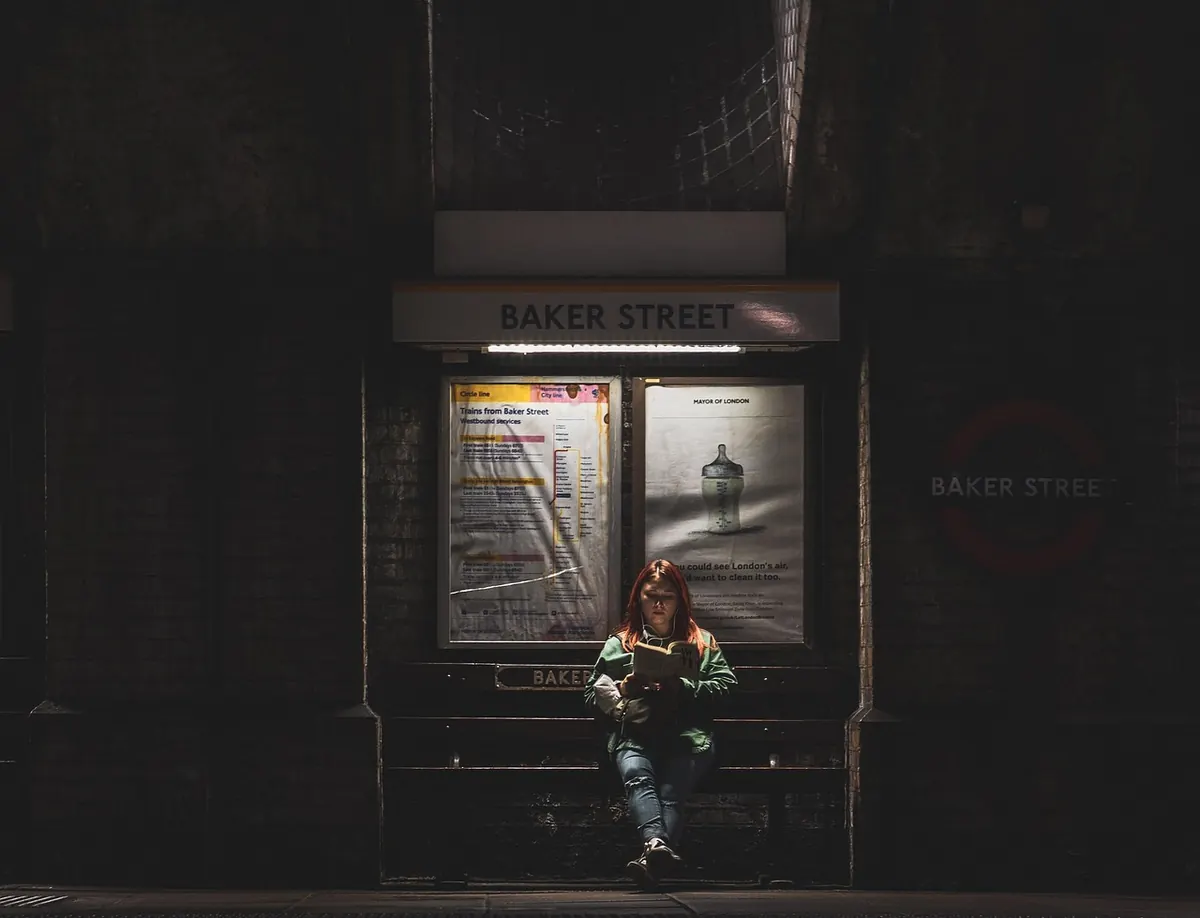
London has been fictionalised so often that reading about it can feel like joining a conversation already in progress. That is part of the pleasure. The books below are grouped by neighbourhood and period rather than by literary reputation, so you can match a novel to a walk you already take, or let one push you towards a corner of the city you have never had a reason to visit. Classics and contemporary writing sit side by side, with a handful of non-fiction titles for anyone who wants the facts behind the fiction.
The classics that still earn their keep
Dickens is the obvious starting point, and Bleak House repays the effort: the fog, the Court of Chancery, the slow grinding of the law around Lincoln's Inn. Our Mutual Friend is the river novel — mud, dust heaps and money made from other people's rubbish. If you would rather not commit to eight hundred pages, take Mrs Dalloway. Woolf's novel unfolds across a single June day in 1923, and its route — Westminster, Bond Street, Regent's Park, Bloomsbury — is entirely walkable. Read the opening pages on a bench in Victoria Embankment Gardens and the book opens up.
Dr Jekyll and Mr Hyde belongs here too, less for the horror than for its geography of respectable squares with back doors. Conan Doyle gave us Baker Street, though the address itself is invented; the street, the parks and the cab routes around it are real enough. On editions: annotated versions of the Victorians are worth the extra few pounds, because half the jokes and half the dread live in the footnotes about trades and street names that now mean something quite different.
Mid-century bedsits and boarding houses
The London of rented rooms and shared landings produced some of the sharpest writing about the city. Patrick Hamilton's Hangover Square is set in Earl's Court on the eve of the Second World War: pubs, landladies and a mind coming apart. Muriel Spark's The Girls of Slender Means puts a hostel of young women in Kensington in 1945 — broke, postwar, and funnier than it has any right to be. George and Weedon Grossmith's The Diary of a Nobody is the comic version of the same territory, a clerk in Holloway recording his own small humiliations with complete seriousness.
Then there is the London of arrival. Sam Selvon's The Lonely Londoners follows Caribbean men through Notting Hill and Bayswater in the mid-1950s, in prose that carries the rhythm of speech rather than the tidiness of the page. Colin MacInnes's Absolute Beginners covers the same streets a few years later, before the property market and the violence of 1958 changed them. Andrea Levy's Small Island lands in 1948, with boarding houses, cold rooms and the gap between what the Empire promised and what people actually found.
North-west London: Willesden to Kilburn
If you live in the north-west, these are your neighbours. Zadie Smith's White Teeth turns Willesden into a comedy of three families, mixed marriages and inherited arguments. Her later NW returns to the same streets — Willesden, Kilburn — with a colder eye on class and money. Guy Gunaratne's In Our Mad and Furious City is set around Neasden and its estates, and reads like something shouted across a courtyard. Gabriel Krauze's Who They Was walks South Kilburn in a voice that refuses to explain itself or apologise.
Nick Hornby's High Fidelity is the lighter option: Holloway, Crouch End, and a record shop that never existed but whose customers you will recognise. Hanif Kureishi's The Buddha of Suburbia takes the opposite view — Bromley and Beckenham, the last stop on the train, and a teenager desperate to get into town.
East and south: Brick Lane to Deptford
Monica Ali's Brick Lane follows a Bangladeshi family in Tower Hamlets across several decades, and it is one of the few novels that treats a single street as a character without turning it into a postcard. Sarah Waters's The Night Watch goes back to the 1940s, with blacked-out streets, ambulance crews and secrets kept from the people closest to them.
South of the river, Diana Evans's Ordinary People puts two couples in South London, with the specific texture of school runs, barbecues and marriages quietly running out of road. Caleb Azumah Nelson's Open Water is set in south-east London — Peckham, Deptford — and is as much about music and dancing as it is about a love affair. Read it for the atmosphere rather than the plot.
Non-fiction: how the city actually works
Fiction gives you atmosphere. These give you the machinery underneath it.
- Peter Ackroyd, London: The Biography — huge, baggy and brilliant. Keep it by the bed rather than trying to read it straight through.
- Henry Mayhew, London Labour and the London Poor — Victorian street traders describing their own working lives.
- Iain Sinclair, Lights Out for the Territory and London Orbital — walking the eastern edges of the city, then the whole circuit of the M25.
- Craig Taylor, Londoners — interviews with people who live and work here, arranged by occupation and hour of the day.
- Judith Flanders, The Victorian City — sewers, markets, traffic, and how the modern city got its shape.
How to read London on foot
The best way to read a London novel is to walk part of it. A few suggestions:
- Match the book to a route you already take. If you commute through Waterloo or Liverpool Street, find a novel set there and read a chapter on the train.
- Read the opening at the place it opens. Mrs Dalloway on the Embankment, Hangover Square in a pub near Earl's Court station, White Teeth on a bench in Willesden.
- Keep a map open. Older novels name streets that have been rebuilt or erased. A gap in the map tells you something — a bomb site, a 1960s redevelopment, a road that arrived later.
- Check when the book was written, not just when it is set. A novel published in 1956 reads differently once you know what happened to those streets in the 1980s.
- Use your local library. Most of this list is easy to reserve through a borough library service, and second-hand copies of the mid-century titles turn up constantly in charity shops.
If you only read three, make them Mrs Dalloway, White Teeth and Craig Taylor's Londoners — a classic, a comic epic, and a portrait of the city as it is now. For a long journey, take Ackroyd, and give yourself several months.
Photo: TheOtherKev / Pixabay